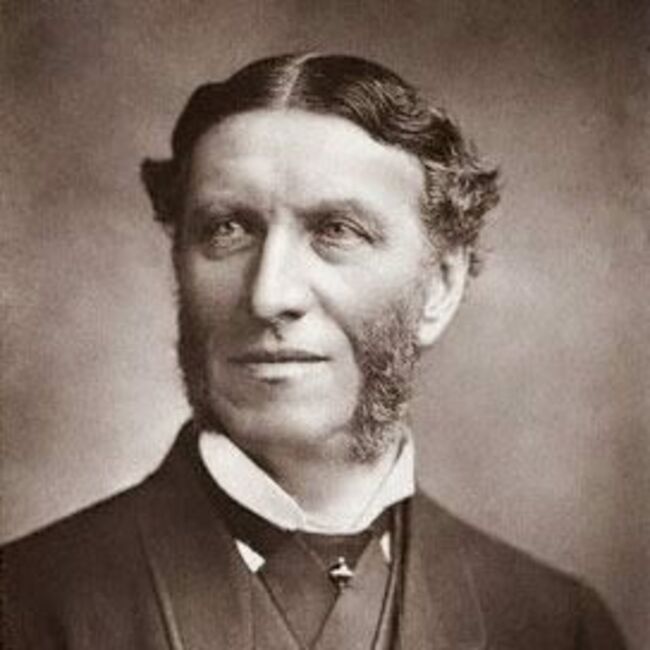
Birth and Family Background:
- Born on 24 December 1822 in Laleham-on-Thames, Middlesex, England.
- Eldest son of Thomas Arnold, a renowned headmaster of Rugby School, and Mary Penrose Arnold.
- His father, a key figure in British educational reform, profoundly influenced Arnold’s worldview. His mother’s intellectual heritage also shaped his cultural and intellectual environment.
- Arnold had notable siblings in literary and intellectual fields: Tom Arnold (literary professor) and William Delafield Arnold (novelist and colonial administrator).
Note: John Keble, a leader of the Oxford Movement, was his godfather.
Early Life and Education:
- Initially tutored by his clerical uncle, John Buckland, in Laleham.
- In 1836, Arnold attended Winchester College but soon returned to Rugby School, studying under his father.
- Demonstrated early talent for poetry, winning prizes for his verse, including Alaric at Rome, written during his time at Rugby.
- In 1840, he matriculated at Balliol College, Oxford, where he formed a lifelong friendship with fellow poet Arthur Hugh Clough. He graduated in 1844 with second-class honors in Literae Humaniores (Classical Studies).
Career Development:
- After a brief teaching stint at Rugby, Arnold was elected a Fellow of Oriel College, Oxford, in 1845.
- In 1847, he became Private Secretary to Lord Lansdowne, Lord President of the Council.
- In 1851, he was appointed Her Majesty’s Inspector of Schools, a role he held for 35 years, where he became a significant advocate for state-regulated secondary education in Victorian England.
Marriage:
- Married Frances Lucy Wightman, the daughter of a prominent judge, in 1851. They had six children, though several died young.
Later Years and Death:
- Arnold’s later years were marked by extensive travel, lectures in the U.S. and Canada, and his growing status as a public intellectual.
- He died suddenly of heart failure on 15 April 1888, while running to catch a tram in Liverpool to visit his daughter.
Arnold’s Literary Career:
1. Early Works:
- The Strayed Reveller and Other Poems (1849): His first collection, published anonymously, featuring The Forsaken Merman, a lyrical exploration of mythological themes. Though initially overlooked, it introduced themes of melancholy and introspection that would define his later work.
2. Empedocles on Etna and Other Poems (1852):
- This collection explores themes of existential struggle, including the philosophical poem Empedocles on Etna, which portrays the despair of the ancient philosopher who seeks release through suicide on Mount Etna.
3. Poems: A New Edition (1853):
- Arnold’s breakthrough work. This volume includes Sohrab and Rustum, an epic about the tragic fate of a father and son on opposite sides of a war, and The Scholar-Gipsy, which explores the mythic search for wisdom and escape from modern pressures.
4. Poems: Second Series (1854):
- Includes Balder Dead, another narrative poem drawing on Norse mythology. Arnold’s poetry of this period blends classical, medieval, and mythological themes with contemporary concerns about faith and doubt.
5. “Dover Beach” (1867):
- Arnold’s most famous poem, Dover Beach reflects on the erosion of religious faith in the face of scientific progress and social change, contrasting natural beauty with human uncertainty.
6. “Thyrsis” (1866):
- An elegy for his friend Arthur Hugh Clough, this poem revisits the pastoral world of The Scholar-Gipsy, exploring themes of loss and the search for enduring ideals in a changing world.
Prose Works and Social Criticism:
1. Essays in Criticism (1865, 1888):
- A pivotal work in Victorian literary criticism. His essay The Function of Criticism at the Present Time emphasizes the importance of objective, disinterested judgment in literary criticism.
2. Culture and Anarchy (1869):
- Arnold’s most famous social critique, exploring the role of culture in society. He criticizes the materialism of the middle class and advocates for “sweetness and light”—a pursuit of beauty and intellectual refinement as the solution to societal problems. He introduces the term Philistines to describe the anti-intellectual mindset of the Victorian middle class.
3. Literature and Dogma (1873):
- This work explores religious belief, arguing for a rational, moral interpretation of Christianity rather than a literal belief in miracles. Arnold describes religion as “morality touched with emotion.”
4. The Study of Poetry (1880):
- In this essay, Arnold asserts that poetry, with its capacity for “high seriousness,” should guide human experience and replace religion and philosophy as a means of conveying universal truths.
Notable Works by Arnold:
- The Strayed Reveller and Other Poems (1849)
- “The Forsaken Merman”
- “The Sick King in Bokhara”
- Empedocles on Etna and Other Poems (1852)
- “The Buried Life”
- “Empedocles on Etna”
- “Tristram and Iseult”
- Poems (1853)
- “Sohrab and Rustum”
- “The Scholar-Gipsy”
- Poems, Second Series (1855)
- “Balder Dead”
- The Modern Element in Literature (1857, lecture)
- Merope, a Tragedy (1858)
- On Translating Homer (1861, lectures)
- The Study of Celtic Literature (1867, lectures)
- Essays in Criticism (1865, 1888)
- New Poems (1867)
- “Dover Beach”
- “Thyrsis”
- Culture and Anarchy (1869)
- Literature and Dogma (1873)
Exam Preparation Tips by Suresh:
- Key Poems: Focus on Dover Beach, The Scholar-Gipsy, and Thyrsis. Analyze their themes of loss, modernity, and existential reflection.
- Social Critique: Understand Arnold’s critique of middle-class materialism in Culture and Anarchy and his views on education and culture.
- Literary Criticism: Be prepared to discuss Arnold’s theories on “high seriousness” and the role of the critic as objective and disinterested.
- Religious Thought: Study Arnold’s approach to religion as a moral and intellectual force, rather than a supernatural one.
-
For daily live sessions you can join us , free of cost –
Whatsapp group-
https://chat.whatsapp.com/H5ijD9ogMdSHsD0kPevL5xWhatsApp Channel –
https://whatsapp.com/channel/0029VarjjA2EFeXhccAQPm3T
You can fined here daily recorded video 👇
https://youtube.com/@examicssk?si=Lr29s7FJOinrR1YnTelegram group…
https://t.me/+InRO-aUEQNQxYjhl